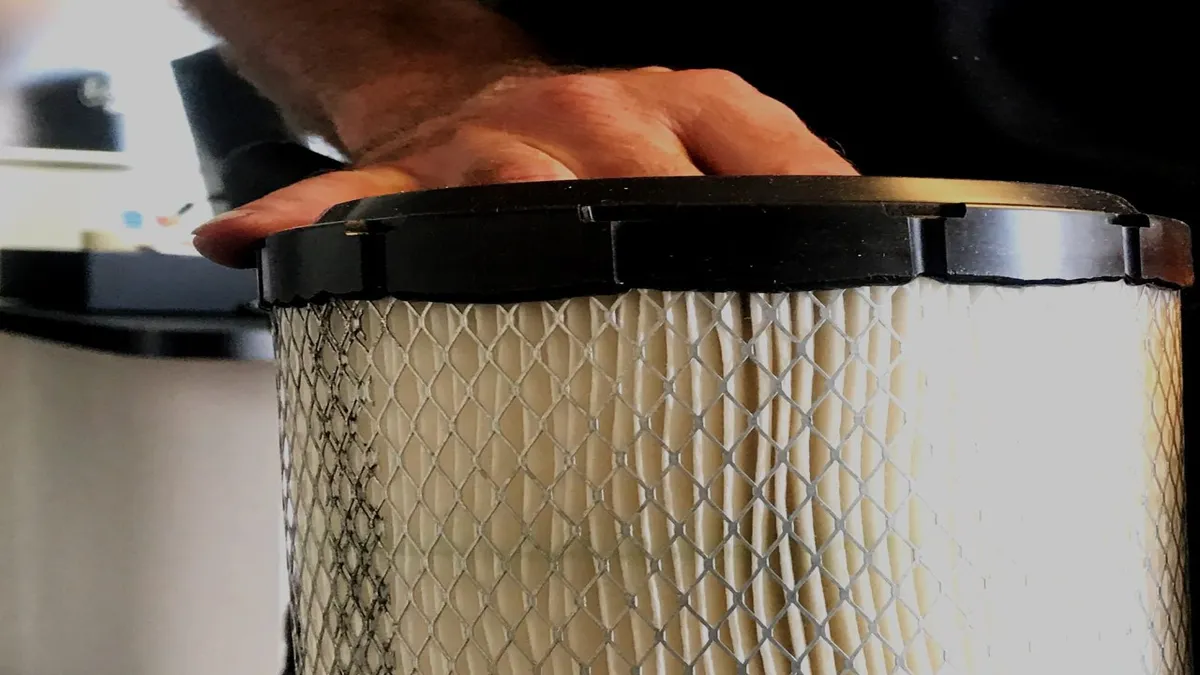
Dust Collector Cartridges
Dust collector filter cartridges are pleated, round filter elements that replace bags in baghouses and cartridge dust collectors. Each cartridge packs 2-3 times the filtration area of an equivalent bag into the same footprint. Polyester, PTFE membrane and nano-coated media are built for pulse-jet cleaning, in lengths 600 to 2,000 mm, open- or closed-end, with fire-retardant options.

Why Dust Collector Cartridges
Dust collector filter cartridges are pleated, round filter elements that replace bags in baghouses and cartridge dust collectors. Each cartridge packs 2-3 times the filtration area of an equivalent bag into the same footprint. Polyester, PTFE membrane and nano-coated media are built for pulse-jet cleaning, in lengths 600 to 2,000 mm, open- or closed-end, with fire-retardant options.
- Pleated design delivers 2-3x the filtration area of an equivalent bag in the same footprint
- PTFE membrane and nano-coated media capture submicron dust and resist moisture
- Polyester, Nomex, fiberglass and conductive media cover temperature and combustible dust duty
- Standard lengths 600-2,000 mm (typical), open- or closed-end with molded urethane gaskets
- Engineered pleat spacing (typical 5-8 mm) prevents dust bridging between pleats
- Drop-in dimensions for common cartridge collector housings — Donaldson, Camfil and Nederman style
- Pulse-jet compatible with high dust-holding capacity between cleaning cycles
- Factory-direct pricing with per-lot inspection reports and sample programs
WHY PLEATED CARTRIDGES
Why Cartridges Beat Bags in a Dust Collector
The switch pays off when you need more area, tighter emissions or fewer changeouts. Here is what the pleat buys you.
Lower Fan Energy
Pleated cartridges carry 2-3x the media area of a bag in the same footprint. More area means lower pressure drop at the same airflow, and fan power follows the pressure curve. A typical cartridge run holds collector pressure 30-50% below a baghouse at equal flow.
Fewer Changeouts
Higher dust-holding capacity stretches the interval between changeouts. Fewer stops mean more production hours and fewer cartridges bought per year. The saving lands on labor and consumables at the same time.
Tighter Emission Limits
Membrane and nano-coated media catch submicron particles that plain felt lets through. Plants chasing stricter limits upgrade media instead of rebuilding the collector. Same housing, same airflow, cleaner stack.
DECISION TABLE
Cartridge Dust Collector vs Baghouse
Both clean air with pulse-jet pulses. The differences show up in area, pressure drop and changeout time.
| Factor | Pleated Cartridge Collector | Baghouse (Bag Filters) |
|---|---|---|
| Filtration area per element | 2-3x a bag of similar size (typical) | Baseline (1x) |
| Fine dust collection | MERV 13-15 typical with membrane media | High overall, weaker on submicron |
| Operating pressure drop | Lower at same airflow (typical) | Higher, climbs faster between cleans |
| Service life | 1-3 years typical | 1-2 years typical |
| Changeout time | Minutes per element, no cage | Cage and clamp handling, slower |
| Footprint for same airflow | 30-50% smaller (typical) | Larger vessel volume |
COST CALCULATOR
What Cartridge Changeouts Cost per Year
Worked example for a plant running 4 cartridge dust collectors, each holding 12 cartridges, with two changeouts per year.
| Line item | Distributor price | Factory-direct |
|---|---|---|
| Cartridges per collector | 12 | 12 |
| Collectors | 4 | 4 |
| Changeouts per year | 2 | 2 |
| Typical unit price | $55 | $38 |
| Annual cartridge spend | $5,280 | $3,648 |
| Annual saving | $1,632 (31%) — covers the labor and downtime of one changeout cycle | |
Typical pricing illustration — actual quotes depend on media, size and volume. Send us your cartridge dimensions for a price list.
KEY SPECS DEEP DIVE
What Defines a Dust Collector Cartridge
Filter Media
Polyester spunbond handles dry, non-abrasive dust. PTFE membrane adds a surface layer that sheds submicron particles and resists moisture. Nomex and fiberglass cover hot gas, and carbon-loaded media drain static charge.
Pleat Geometry
Pleat count and spacing decide how much media fits and how well it cleans. Tight pleats trap dust between folds and blind early — typical spacing runs 5-8 mm. Deep-pleat designs use separators to hold the folds open.
Seal & Gasket
The gasket is where leaks start. Open-end cartridges seat on a molded urethane gasket; closed-end designs drop over a clamp. A failed seal lets unfiltered air bypass straight to the fan and out the stack.
Temperature & Fire Resistance
Continuous ratings (typical): polyester 135°C, Nomex 200°C, PTFE 250°C, fiberglass 260°C. Combustible dust calls for antistatic media and fire-retardant treatments. Tell us the dust analysis before we quote.
OEM / ODM FACTORY DIRECT
Your Brand, Our Pleating Line
Private-label cartridges let distributors and collector OEMs build a recurring filter line without owning a factory. We pleat, test and pack under your part numbering — you keep the customer relationship.
- • Private-label packaging with your part numbering system
- • Custom diameters, lengths and media for non-standard housings
- • Sample program before volume production
- • Export documentation and consolidated shipping
- • CE / RoHS / REACH compliance support
WHAT TO SEND US
Cartridge dimensions, media need, dust data
OD, ID, length, gasket type and media — or a photo of the old cartridge. Add dust type, operating temperature and airflow. Our engineers confirm the right build before you commit to a single piece.
POPULAR SEARCHES
* Search terms collected from Semrush competitor keyword data — contact us to discuss matching products.
FAQ
Questions Buyers Ask
How often should dust collector cartridges be replaced?
Typical guidance is 1-3 years for most industrial duty, or when differential pressure stays high after pulse cleaning. Watch the gauge across the collector — a cartridge that no longer cleans down to baseline is spent. Dust load and moisture decide the real interval.
Can dust collector cartridges be cleaned and reused?
Online pulse-jet cleaning is built into normal operation — it shakes off the dust cake between cycles. Some cartridges also survive off-line washing, but not all media do. Wet cleaning can collapse pleats or damage the membrane. Confirm with our engineers before washing a cartridge off-line.
What temperature can dust collector cartridges handle?
Standard polyester media runs continuously at up to 135°C (typical). Nomex handles around 200°C. PTFE membrane and fiberglass media reach 250-260°C (typical). Peak spikes count differently from continuous limits — send your duty cycle when you quote.
Do you offer fire-retardant or antistatic cartridges?
Yes. Conductive and antistatic media, fire-retardant treatments and earthing options are available for combustible dust. ATEX-relevant requirements are reviewed case by case. Send the dust analysis and operating conditions with your inquiry.
Which standards do your cartridges meet?
Cleanable media is tested to ISO 11057 and VDI 3926 methods. Filtration efficiency is rated to MERV classes under ASHRAE 52.2 where the application needs it. Per-lot dimensional and media checks back every shipment.
Can I get samples before a bulk order?
Yes. Sample orders start from a single cartridge so you can verify fit, media and pressure drop in your own collector. Standard media samples ship within 3-7 days. Volume pricing tiers apply from 50 pieces.
What certificates do you provide?
Every lot ships with a per-lot inspection report covering dimensions, gasket integrity and media checks. CE, RoHS and REACH compliance support is available on request. Export documentation is standard on every order.
Can you make private-label cartridges for our brand?
Yes. OEM and private-label production is available — your packaging, your part numbering, our media and QC line. We cover custom diameters, lengths and media for non-standard housings. Samples precede volume runs.