
How Long Do Filter Bags Last? Lifespan, Replacement & Cost Guide | PLEATPURE
Table of Contents
A plating shop in Guadalajara changed its filter bags every month "because that's what the previous supplier said". Nobody had ever measured pressure drop. When the shop finally logged ΔP, the bags were still running at 60% of the change-out threshold after six weeks — the shop had been throwing away half the bag life for two years, roughly USD 4,800 a year in media it did not need to buy.
Filter bag life is not a fixed number — it is a function of four variables: the micron rating, the contaminant load, the fluid chemistry, and the operating temperature. Most buyers change bags on a calendar habit instead of a condition, and the cost of that habit is real. This guide covers what determines bag life, typical ranges by application, the warning signs that matter, and how to extend life — and budget for replacement — with data instead of habit. It is written for maintenance teams and purchasing managers who want the media cost per litre actually optimised.
Key Facts at a Glance
- Typical range — Liquid filter bags in moderate duty last 2–6 months; heavy-duty or high-load applications can need changes every 1–4 weeks; low-load polishing can run 6–12 months.
- The change signal — Replace on pressure drop, not on the calendar: typically when ΔP rises 10–15 psi (0.7–1.0 bar) above the clean reading, or at the housing manufacturer's maximum.
- Biggest life killers — Oversized micron rating for the load (fines bypass), undersized bag area (surface blinding), incompatible chemistry (media degradation), and heat.
- Cost lever — Tracking ΔP and load can cut media spend 30–50% versus calendar-based changes, and also protects downstream equipment from breakthrough.
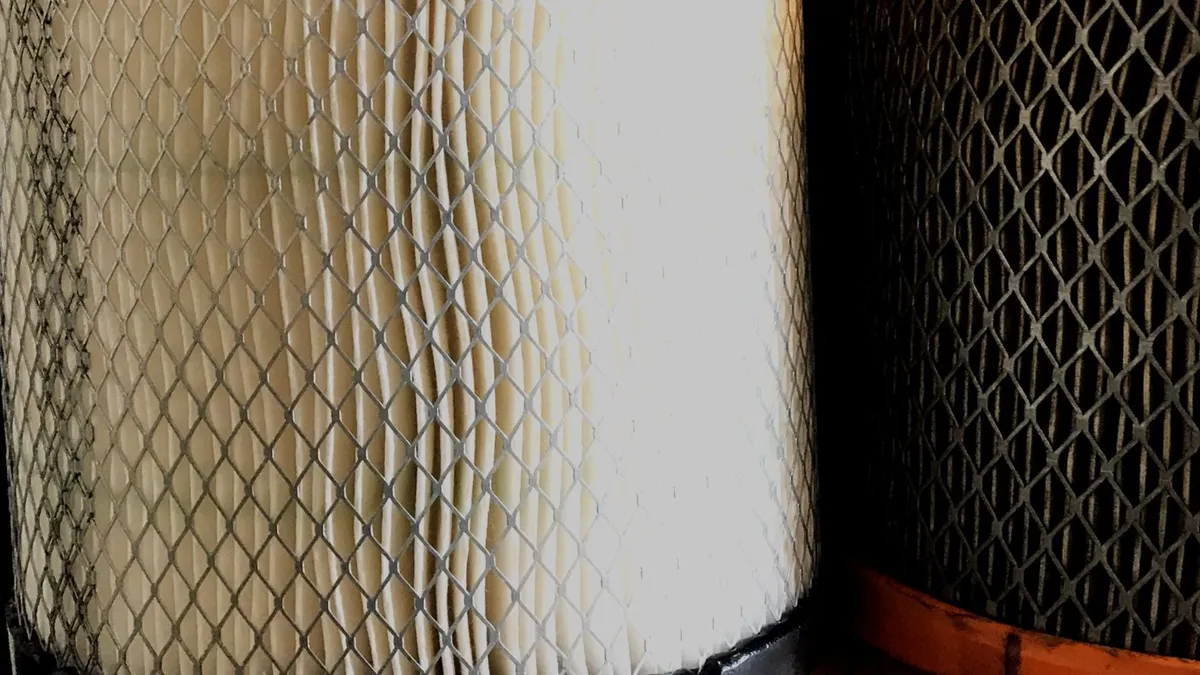
- Media matters — Felt bags hold more dirt than monofilament mesh at the same micron; pleated bags multiply area 2–4× and extend run time on the same housing.
What Determines Filter Bag Life
Four variables decide how long a bag lasts, in rough order of impact:
1. Contaminant load and particle size. The bag is a sieve: it removes particles at or above its micron rating. Heavy load (high suspended solids) fills the bag faster; oversized particles blind the surface faster than fines. If the upstream process is dirty, no bag survives long — the fix is upstream, not a "better" bag.
2. Micron rating versus requirement. A bag rated finer than the application needs captures more and plugs faster. A 1 µm bag on a process that only needs 25 µm removal is burning money. The right rating is the coarsest that meets the spec — every fineness step costs life.
3. Chemistry and compatibility. The fluid must not attack the media. Polypropylene handles most acids, alkalis and solvents; polyester (PE) resists oils but degrades in strong alkalis and hot water; nylon (PA) resists solvents but not acids; PTFE is the chemically inert option. Wrong chemistry = swollen, weakened or dissolved media = premature failure, sometimes with media debris downstream.
4. Temperature. Every media has a continuous and a peak limit. Polypropylene: up to ~90°C continuous; polyester: up to ~150°C dry service (lower wet); nylon: up to ~120°C; PTFE: up to ~260°C. Exceeding continuous limits accelerates degradation silently — the bag looks fine until it splits.
Typical Lifespan Ranges
| Application | Typical bag life | Main driver |
|---|---|---|
| Cooling water / process water, low solids | 3–6 months | Fine silt loading |
| Heavy industrial liquids, high solids | 1–4 weeks | Surface blinding |
| Paint / coatings filtration | 2–8 weeks | Pigment loading + viscosity |
| Chemical / solvent filtration | 2–6 months | Chemistry, not solids |
| Food & beverage polishing | 2–6 weeks | Fine organics + hygiene changes |
| Pharmaceutical / final polish | 1–3 months | Spec-driven changes |
These are starting points, not guarantees. The only way to know your site's number is to measure ΔP at a fixed flow and record it. Three change-out cycles of logged data will tell you more than any table.
Signs a Bag Is Done
- Pressure drop at the change threshold — typically 10–15 psi (0.7–1.0 bar) above clean, or the housing limit. The single most reliable signal.
- Flow drops below process requirement — the system compensates by throttling or the pump works harder; energy cost climbs before you notice the bag.
- Effluent quality degrades — particles downstream that the bag is supposed to catch; this means breakthrough, either a split seam, a bad seal, or the bag loaded past its capacity.
- Visible damage — split seams, holes, discoloured or stiffened media, media swelling. Inspect every removed bag; the failure mode tells you the next fix (seal, rating, media, or upstream).
How to Extend Bag Life
- Match the rating to the spec — use the coarsest bag that meets effluent quality; finer is not better, it is just more expensive.
- Stage the filtration — a coarse pre-bag (50–100 µm) ahead of a fine bag (5–10 µm) can multiply the fine bag's life 3–5×; the coarse bag is cheap, the fine bag is not.
- Use pleated media where load allows — a pleated bag packs 2–4× the area of a felt bag in the same envelope, cutting ΔP and extending run time on moderate loads.
- Fix the chemistry match — verify the media is compatible with the actual fluid and temperature; a media upgrade (e.g. PTFE-coated) can outlast the standard bag several times in aggressive service.
- Clean the housing and gasket seat at every change — bypass past a dirty seal wastes the new bag; a clean seat doubles as a quality checkpoint.

Replacement Cost and Budgeting
Bag cost per litre is the number that matters: (bag price + labour + disposal) ÷ litres filtered in the bag's life. A cheap bag changed twice as often is usually more expensive than a better bag changed half as often — the labour and downtime often cost more than the media. Budget with data: log change dates, ΔP at change, and litres per run for three cycles; then project annual media cost with confidence, and negotiate volume pricing on the actual number.
PLEATPURE supplies felt, mesh and pleated liquid filter bags from 1 to 200 micron in standard and custom sizes, with media selected to your fluid and temperature — and we can help you size the staging that cuts your annual media bill.
The Bottom Line
Filter bag life is a measured variable, not a guess: 1–4 weeks in heavy duty, 3–6 months in moderate duty, longer in polishing — and the number for your site comes from ΔP logging, not from a calendar or a supplier's habit. Match the rating, stage the load, verify the chemistry, and the media cost per litre drops 30–50%. Send us your fluid, flow, temperature and current bag spec — we will size the bag and the staging for the longest life at the lowest cost per litre.
NEXT STEP
Ready to Switch to Replacement Filter Cartridges?
Send us your element dimensions or part numbers — our team responds within 24 hours with pricing and lead time.
Written by
Ray ChanFiltration Buyer's Guide Author · Industrial Filter Cartridge Specialist. Ray helps global importers, distributors and maintenance teams source factory-direct replacement filter cartridges.