
Food-Grade Filter Cartridge Materials: Regulations & Selection Guide 2026 | PLEATPURE
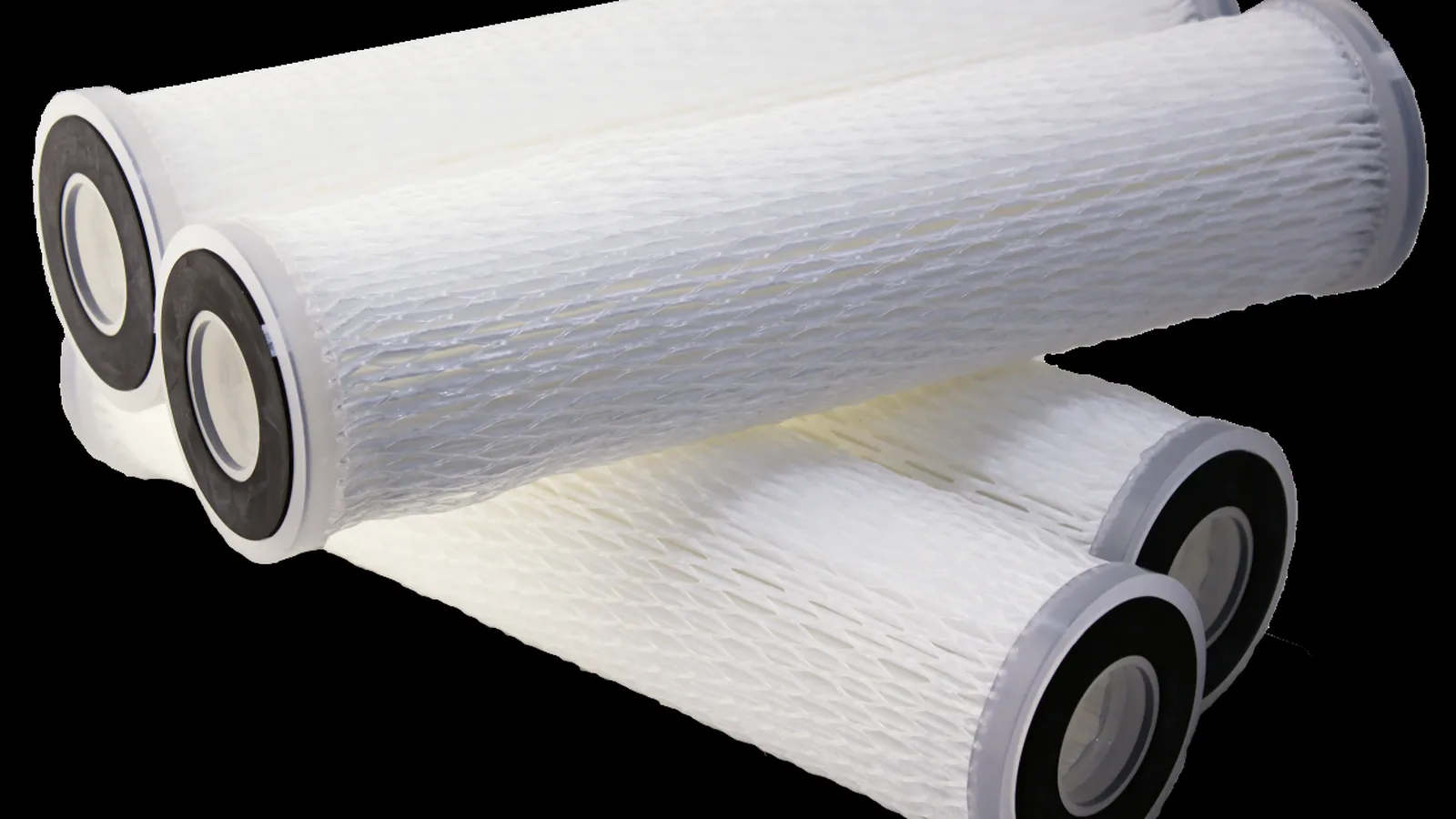
Table of Contents
A juice bottler in Guadalajara bought low-cost polypropylene cartridges for a new line, chosen on price. Three months later a routine import inspection flagged the line: the cartridge media carried no food-contact documentation, and the plant could not prove compliance with the local food-contact regulation, which mirrors FDA 21 CFR. The line was suspended until the plant replaced every cartridge with documented food-grade elements and submitted certificates. The savings on the original order: about USD 900. The cost of the suspension: a full production week and a re-inspection fee.
Food-grade filtration is not a grade of quality — it is a documented legal status. A cartridge used in contact with food, beverage, or water for human consumption must be made of materials permitted for food contact, and the manufacturer must be able to prove it. This guide covers the regulations that matter (FDA 21 CFR and EU 10/2011 being the two anchors), the approved materials, extractables and migration, what certification actually looks like, and how to select a compliant cartridge. It is written for QA managers, process engineers and buyers who sign the compliance line.
Key Facts at a Glance
- The two anchors — US: FDA 21 CFR 177 (indirect food additives) governs the materials; EU: Regulation (EU) 10/2011 governs plastic materials in food contact. Many other markets (Latin America, APAC) mirror one of these.
- Approved media — Polypropylene, polyester, nylon, PTFE and stainless steel are the common food-contact filter media; each must meet the applicable migration limits.
- Extractables matter — a compliant cartridge is tested for extractables in food-simulating solvents; the results (in mg/L) must be below the specific migration limits (SML).
- Documentation is the deliverable — compliance is proven by a Declaration of Conformity plus material certificates, not by a "food-grade" label on the box.
- Application decides — a cartridge safe for water contact is not automatically safe for hot, acidic or alcoholic products; the food simulant, temperature and time all change the migration picture.
The Regulations That Matter
US — FDA 21 CFR. The US Food and Drug Administration regulates food-contact materials under Title 21 of the Code of Federal Regulations. For filtration, the relevant sections sit in Part 177 (indirect food additives: polymers) and Part 178 (adjuvants and production aids). 21 CFR 177.1520 covers olefin polymers (polypropylene), 177.1500 nylon resins, 177.1630 PET, 177.1550 PTFE, 177.2600 rubber (for seals). A cartridge manufacturer's compliance statement typically cites the specific CFR sections for each material in the cartridge.
EU — Regulation (EU) 10/2011. This is the framework for plastic materials and articles intended for food contact. It sets a positive list of authorised monomers and additives, overall migration limits (OML: 10 mg per dm² of surface, or 60 mg/kg of food), and specific migration limits (SML) for individual substances. Compliance is demonstrated by testing to the EN 1186 series for overall migration and the relevant EN standards for specific migration.
Other markets. Most Latin American and APAC food-contact regulations either adopt or closely mirror one of these two systems (e.g. MERCOSUR Resolution GMC 32/07 mirrors EU lists; China GB 4806 series is aligned with EU principles). For an export buyer, specifying "FDA 21 CFR compliant + EU 10/2011 compliant" covers virtually every market.
Approved Media and Components
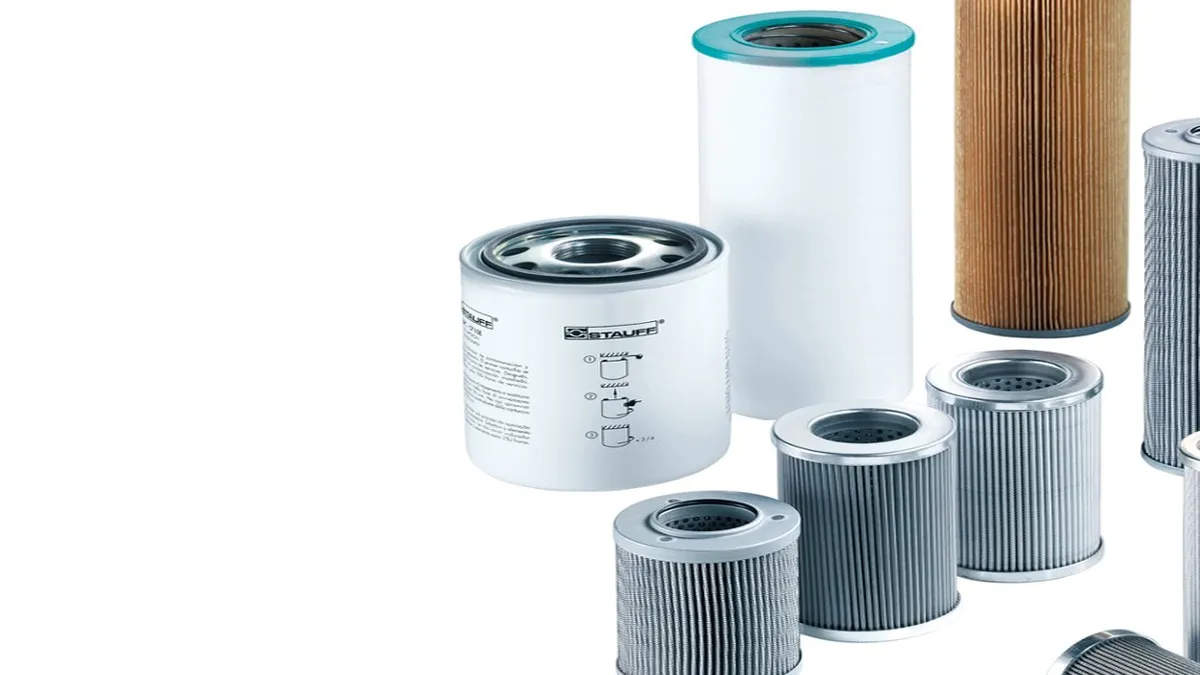
A filter cartridge is not one material — it is several: the media, the core, the end caps, the O-rings, and any adhesives or bonding. Every component that contacts the product must be food-contact approved:
- Media — melt-blown polypropylene, pleated polypropylene, nylon (PA6/PA66), polyester (PET), PTFE membranes, and stainless steel mesh. Polypropylene is the most common food-grade media: inert, weldable, and listed under 21 CFR 177.1520.
- Cores and cages — polypropylene cores (same CFR listing) or stainless steel for high temperature and chemical duty.
- End caps — thermally bonded polypropylene caps (no adhesives) or stainless steel caps; the bonding method avoids adhesives that would add a new compliance question.
- Seals — EPDM, silicone, Viton (FKM) and PTFE O-rings are the food-contact options; EPDM is the default for water and food duty, silicone for high temperature, Viton for aggressive chemistries.
- Adhesives and bonding agents — the fewer, the better; thermal bonding and ultrasonic welding eliminate the compliance question entirely.
Extractables and Migration
Compliance is not "the material is on a list" — it is "nothing harmful migrates into the product". The testing works like this: the cartridge is exposed to food-simulating solvents (water, 10% ethanol, 3% acetic acid, olive oil, depending on the product type), at the intended use temperature and time, and the migration of substances into the simulant is measured. The results must stay under the limits: the EU overall migration limit of 10 mg/dm², and the specific migration limits for individual substances such as oligomers, antioxidants and plasticisers.
Two practical implications: (1) a cartridge validated for cold water is not automatically validated for hot juice — temperature raises migration; (2) a "food-grade" claim without extractables data is a marketing statement, not a compliance proof. Buyers should ask for the extractables summary or at least the compliance declaration naming the simulants and conditions tested.
What Certification Looks Like
A compliant cartridge ships with documentation, and the buyer should know what to ask for:
- Declaration of Conformity (DoC) — the manufacturer's statement that the cartridge complies with the cited regulations, naming the materials and the CFR/regulatory sections.
- Material certificates — for the media, core, caps and seals, showing the resin grade and its food-contact listing.
- Extractables / migration test summary — results from a recognised laboratory, or a reference to the test standard and values.
- Batch traceability — lot numbers that tie a shipment back to its material lots and test documentation.
If a supplier cannot produce these three documents, the cartridge is not "food-grade" — it is an untested cartridge in a food plant, which is exactly the exposure a QA manager must not sign for.

Selecting a Food-Grade Cartridge
- Name the product and its conditions — temperature, contact time, alcohol/acidity/oil content. These decide the food simulants and the migration picture.
- Choose the media by duty — polypropylene pleated for general water and beverage; nylon for good chemical resistance and high flow; PTFE membrane for sterile or aggressive duty; stainless mesh for cleanable service.
- Confirm the end cap and O-ring — 226 bayonet for food duty (positive seal, no bypass), EPDM or silicone O-rings; thermally bonded caps.
- Ask for the compliance pack — DoC, material certs, extractables summary — before the PO, not after delivery.
- Keep the batch trace — file the lot numbers with the batch records; an audit asks for the paper, not the story.
Common Compliance Errors
- Buying on the word "food-grade" — the label is marketing; the documentation is the proof. Ask for the DoC.
- Ignoring the O-rings and adhesives — a compliant media with a non-compliant seal or glue is a non-compliant cartridge.
- Assuming one cert covers all conditions — migration depends on temperature, time and product; verify the tested conditions match your use.
- No traceability — an audit cannot accept a cartridge with no lot number and no material certificate.
- Cheapest-bid compliance — the price gap is often the missing documentation; the suspension costs more than the difference.
The Bottom Line
Food-grade filtration is a documented legal status, not a quality claim: FDA 21 CFR and EU 10/2011 are the anchors, polypropylene and the other approved media carry the duty, extractables data proves the safety, and the DoC, material certs and batch trace are the deliverable. Specify the product conditions, select the media and seals, and demand the compliance pack before you order. PLEATPURE supplies food-contact cartridges with the compliance documentation and batch trace — send us your product, temperature and flow, and we will specify the compliant cartridge.
NEXT STEP
Ready to Switch to Replacement Filter Cartridges?
Send us your element dimensions or part numbers — our team responds within 24 hours with pricing and lead time.
Written by
Ray ChanFiltration Buyer's Guide Author · Industrial Filter Cartridge Specialist. Ray helps global importers, distributors and maintenance teams source factory-direct replacement filter cartridges.